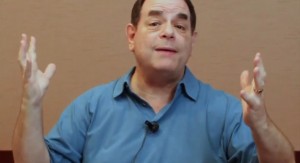
 Marc Prensky has spoken to audiences around the world. He is passionate about giving kids the best possible chances in life and as an educator wants to see our approach to education change to better suit the needs of the 21st Century.

Dr Ken Robinson is a leading force in the development of creativity and in this video he expounds on the issue of creativity and the education system and his view that the education system may well drive out the skills that we will come to depend on in the future. His wit and engaging approach is used with skill to draw you in while he weaves a compelling argument to challenge our current approach in formal education. He promotes his strongly held views that creativity needs to be nurtured and not undermined by the education system.
In a previous post on this blog I described the work of Daniel Pink and his arguments regarding the way our education system seems to give preference to developing left brain thinking! Dan Pink claimed that the more creative right sided thinking was being stifled in the traditional education system as it does not recognise, value or develop creativity. The argument is well known in education systems that seem to value measuring outcomes in terms of Maths and English SAT results or other forms of formal tests.
In the US, as in the UK, SATS scores and examination results are THE measure and all else seems to fade into insignificance. The name given to the US programme is 'No Child Left Behind', aiming to secure standards for all children by relentlessly focusing on standards of mathematics and literacy - many educators are concerned of what they claim is the bias toward SAT scores and not the equally important development of creativity. Maybe that is why some that I met in Boston in 2007 referred to this programme as 'No Child Left Alive'!

Dave Seddon is headteacher of Baxter College in the Kidderminster area of Worcestershire, UK. When he arrived at the school he faced a huge challenge with a school that was deemed to be failing, had falling student numbers and was in an ageing building that seemed well matched to the then aspiration of the school.
He has turned the school around in a remarkably short time and won the Public Servants of the Year Award in 2006 for his achievement. Dave has very strongly held views about the creation and sustainability of effective learning environments and he set these out in a Powerpoint presentation he made which is now posted on the Specialist Schools and Academies Trust website. The presentation makes clear Dave's' determination to make a difference to the lives of the young people in his care and shows just what an impact he and his new revitalised team has made.
The educational turnaround has been made of of many components, together combining to have a powerful effect on the school. Among the mix of issues was the nature of the building and his efforts to make changes to better reflect the atmosphere and culture to more closely fit with his own vision for the school.
I spoke to Dave about the work he has been doing and some of the challenges he faced and still faces and a podcast of part of our conversation is with this post.
Addition: Dave Seddon was awarded an OBE (Order of the British Empire) by the Queen in her 2013 Birthday Honours list for services to Education.
Thomas Deacon Academy in Peterborough UK was one of the buildings created to demonstrate an entirely new approach to the design of schools as part of the UK's Building Schools for the Future programme. The design, brainchild of the well known designer Norman Foster, is certainly nothing like any school I have been to before. The Foster and Partners business has been responsible for some of the most celebrated designs world wide.
The Academy is actually an amalgam of three previous schools to create a school of over 2000 students aged 11 to 18. I visited the school during a typical school day the fact that 2000 pupils were are work there was pretty difficult to believe as the place was not overcrowded, nor were corridors overflowing with the rush of bodies between lessons. First Myth exploded for me was that a school has to look like the schools we all attended.
As with any design there were issues that could have been addressed slightly differently e.g that classrooms were a little smaller than you night ideally want, but they were bright inviting places geared to focused work. Very few straight walls in the design which is often frowned on by teachers as not being suitable for standard classroom use - but these are not standard classrooms with fill glass walls on the interior making classroom activity visible to anyone passing. Two further myths exploded for me were that you have to have rectangular rooms and that working in classrooms that are open for all peer into.
Again this might put some people off claiming that students would be distracted by things going on outside the classroom. I was pretty impressed to see a group of students sitting chatting and laughing outside one of the classrooms sitting on a settee with students inside the room not taking a jot of notice - the novelty had obviously long worn off.
Another exploded myth is that they use thin client systems throughout the school, 1,100 terminals for a school population of 2,200 students! The technical team reported that they were reliable - suffered from some glitches as with any system and had been delivering everything that the students and teachers wanted. There are some fat clients for use with CAD/CAM or some other specific curriculum tasks but everything else is delivered through thin clients.
The concept of floors seems to vanish as although there are levels there are also structures that defy the normal idea of floors - the library is built above the dual lecture theatre but that is buried into the ground so the layout looks very different from what you would normally expect.
All in all the school opens a whole new set of ideas around the notion of what a school should look like - not surprisingly the students seem to love it.
Libraries have been important places for the sharing of text based materials for centuries. There are many famous libraries across the world holding some of the most amazing resources. Trouble is that many of these resources were only available to researchers or academics until the arrival of digital technologies.
In schools the library has also seen changes with the arrival of digital resources with many more school libraries now equipped with computers so that users can carry out research using the web as well as other resources held by the library. In some schools this combination of technology and traditional printed material has been merged to create the Resource Centre or the Media Lab.
The change in use of school libraries has been interesting. Schools now tend not to spend money on expensive resources such as encyclopedia when they can access up to date and low cost resources that do the same job online. The non-fiction resource has become the internet which has allowed some schools to report that they have been able to expand their range of fiction materials and stimulate an increase in reading for pleasure.
So are libraries of the future only places where the balance between the non-fiction and fiction materials will shift further to become more and more digital? If this is the case why bother with a physical space? If it has social aspects (not something I tend to see in libraries) then is not the social networking provided by digital technologies far more powerful than could be achieved simply by meeting in a physical space called a library? Maybe libraries are gradually going to shrink to become the repository for the rare original artifact that you can go and visit....... We need to think more about the function and role of libraries in schools - what sots of things should be available in these places and just what will they mean to the generation that is growing up as avid web users and who often report that they feel agitated when not connected!
This video clip explores some interesting ideas about the potential of the lib. Interesting that the library of the future is a physical space and that there are actually books there - also interesting that it does not look like any library that I have visited..... yet!

 Posts


