There is much discussion about Transforming Education but what does this mean and how can you transform something that in many countries is driven by achieving specific outcomes. We all know that we need our schools to deliver citizens ready for work in the 21st Century but what does that actually mean when the measures we have for success are largely the ones that we have used for hundreds of years.
If you spend any time trying to find a definition of 'Transformation' as it applies to education then you won't find anything definitive. there are lots of people and organisations that state they are engaged in transformational change but very little to describe what that fundamentally means. Let us look at what we know:
- Young people now engage in a wide range of activities some of which were not available only a few years ago. Much of this activity is connected with communication, either through their mobile phone or via the various communities they join online.
- There are some young people who have no interest in technology and although most will have a mobile phone they may well not take part in any online collaboration.
- The curriculum in many schools remains as it was ten or more years ago. In the UK we are exploring new structures for learning through such things as diplomas which will require collaboration between institutions but the bulk of the curriculum is still focused on traditional models
- Quite a lot of the technology kids will use outside school will not be allowed in many schools
- Kids like to collaborate and be creative.
- Technology will continue to develop and will do so based on what the market requires - much of the market are young people

The outcome of the above is that we are creating two worlds; one which is the formal world of school and the other is the personal space surrounding the learner. Of course there is already overlap between these two but the impact of technology is pushing the world of the personal
space further away from the formal world of school.
In my view transformation, in part, must be greater inclusion of the informal personal space within the formal education space. How you do that and to what extent is the real challenge.

Professor Sugata Mitra is an advocate of allowing children to use their innate abilities to learn through the use of technology and learning in groups. He is currently Professor of Educational Technology at the School of Education, Communication and Language Sciences at Newcastle University, UK.
His now famous Hole in the Wall experiment was the inspiration for the Indian author Vikas Swarup to write his first novel which was then to become the movie Slumdog Millionaire!
The hole in the wall experiment involved placing a computer kiosk in the wall of an Indian slum in Dehli to observe how children would use it. The experiment was established to prove that children could learn how to use computers without any formal training. The experiment has since been repeated at many places in India, Cambodia, Africa and within the UK with amazing results.
The HIWEL (Hole In the Wall Education Ltd) team have undertaken both qualitative and quantitative analysis of the various experiments covering a range of measures such as Academic performance and Peer to Peer Learning Patterns.
What this might say about the education of children in developed countries is both interesting and challenging as Professor Mitra says that his findings are not restricted poor families in other countries but for any child which could be said to be 'remote'. He suggests that the word 'remote' could apply to children in rural locations or in cities anywhere in the world.
If children can work collaboratively to solve shared problems using technology to support their learning and they appear to do this more effectively than would otherwise be the case then why do we need teachers?
What Professor Mitra is saying does not actually remove teachers but it does change their role and it raises important questions about our approach to teaching and learning, particularly for very young children and opportunities they have for working with technology in groups.
Interesting to consider whether the collaboration always needs to be working together on the same machine rather than working in online communities.
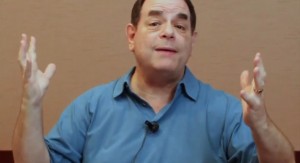 Marc Prensky has spoken to audiences around the world. He is passionate about giving kids the best possible chances in life and as an educator wants to see our approach to education change to better suit the needs of the 21st Century.

Dr Ken Robinson is a leading force in the development of creativity and in this video he expounds on the issue of creativity and the education system and his view that the education system may well drive out the skills that we will come to depend on in the future. His wit and engaging approach is used with skill to draw you in while he weaves a compelling argument to challenge our current approach in formal education. He promotes his strongly held views that creativity needs to be nurtured and not undermined by the education system.
In a previous post on this blog I described the work of Daniel Pink and his arguments regarding the way our education system seems to give preference to developing left brain thinking! Dan Pink claimed that the more creative right sided thinking was being stifled in the traditional education system as it does not recognise, value or develop creativity. The argument is well known in education systems that seem to value measuring outcomes in terms of Maths and English SAT results or other forms of formal tests.
In the US, as in the UK, SATS scores and examination results are THE measure and all else seems to fade into insignificance. The name given to the US programme is 'No Child Left Behind', aiming to secure standards for all children by relentlessly focusing on standards of mathematics and literacy - many educators are concerned of what they claim is the bias toward SAT scores and not the equally important development of creativity. Maybe that is why some that I met in Boston in 2007 referred to this programme as 'No Child Left Alive'!

Dave Seddon is headteacher of Baxter College in the Kidderminster area of Worcestershire, UK. When he arrived at the school he faced a huge challenge with a school that was deemed to be failing, had falling student numbers and was in an ageing building that seemed well matched to the then aspiration of the school.
He has turned the school around in a remarkably short time and won the Public Servants of the Year Award in 2006 for his achievement. Dave has very strongly held views about the creation and sustainability of effective learning environments and he set these out in a Powerpoint presentation he made which is now posted on the Specialist Schools and Academies Trust website. The presentation makes clear Dave's' determination to make a difference to the lives of the young people in his care and shows just what an impact he and his new revitalised team has made.
The educational turnaround has been made of of many components, together combining to have a powerful effect on the school. Among the mix of issues was the nature of the building and his efforts to make changes to better reflect the atmosphere and culture to more closely fit with his own vision for the school.
I spoke to Dave about the work he has been doing and some of the challenges he faced and still faces and a podcast of part of our conversation is with this post.
Addition: Dave Seddon was awarded an OBE (Order of the British Empire) by the Queen in her 2013 Birthday Honours list for services to Education.

 Posts


